info@luxedentalarts.com


People put off dental implants for all kinds of reasons — cost, fear, time, or simply not knowing where to start. And then months become years, and a quiet worry sets in: Is it too late now? The honest answer is that it’s rarely too late, but waiting does introduce complications that make the process more involved. Here’s what actually changes over time, what can be done about it, and how to think about moving forward.
The Real Issue With Waiting: Bone Loss
Tooth loss doesn’t just leave a gap in your smile. The moment a tooth root is gone, the jawbone beneath it begins to resorb — essentially shrinking because it no longer receives the stimulation that a functioning root provided. This process starts relatively quickly, with measurable bone loss often occurring within the first year after extraction. Over several years, the ridge can become significantly narrower and shallower.
This is the primary reason dentists recommend addressing missing teeth sooner rather than later. Bone volume is what makes implant placement both possible and predictable. When it diminishes substantially, placement becomes more technically demanding and sometimes requires preparatory bone grafting before an implant can even be considered.
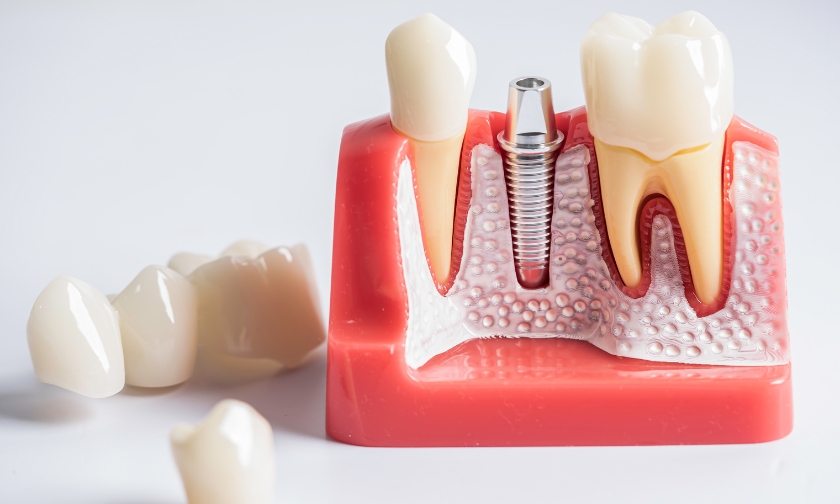
That said, bone grafting procedures have become far more refined and reliable over the past two decades. For most patients — even those who’ve been missing teeth for years — bone volume can be rebuilt to a level that supports a stable implant. At Luxe Dental Arts in Sugar Land, Texas, Dr. Karishma Sheth evaluates each case individually, assessing current bone structure through 3D imaging to determine the most realistic and health-supportive path forward. For patients seeking a metal-free option, a zirconia implant restoration is often the end goal — and bone grafting, when needed, is simply the first step toward getting there.
What Bone Grafting Actually Involves
Bone grafting sounds daunting, but the procedure is generally well-tolerated and performed under local anesthesia. The graft material, which can come from your own bone, a donor source, or a synthetic biocompatible material, is placed at the deficient site to encourage your body to generate new bone over a healing period of several months. Once adequate volume is confirmed, implant placement can proceed.
Holistic dental practices like Luxe Dental Arts are especially attentive to graft material selection, favoring options that minimize the immune burden and support the body’s natural regenerative capacity. This matters because successful grafting isn’t just about filling a space – it’s about creating an environment where your biology can build new bone tissue.
Age Is Not the Limiting Factor You Might Think
There’s a persistent belief that older patients are poor implant candidates. This deserves a direct correction: age alone is not a contraindication for dental implants. Implant placement in patients well into their 70s and 80s has been shown to be successful in the literature, provided that systemic health factors are appropriately managed.
What matters far more than age is overall health status. Conditions like uncontrolled diabetes, active osteoporosis, or autoimmune disorders that affect healing can influence candidacy, but many of these are manageable with proper coordination between your dental and medical teams. The conversation at Luxe Dental Arts always considers the full picture: not just bone volume and bite mechanics, but how your overall health supports or complicates the healing process.
For older patients who are concerned about metal materials or immune reactivity — both increasingly discussed topics in integrative health — zirconia’s bioinert, metal-free profile makes it a thoughtful choice. It doesn’t introduce metal ions into aging tissue, and its ceramic composition is well-tolerated even in patients with complex health backgrounds.
Situations Where “Too Late” Might Apply
While the vast majority of delayed implant cases remain treatable, there are some genuine situations where implants become significantly more challenging or in rare cases, not viable without extensive preparation.
Severe ridge atrophy. Years of denture wear combined with no bone grafting can lead to extreme bone loss. In these cases, ridge augmentation is extensive and may involve multiple surgical stages over a year or more. The process is manageable for motivated patients, but it requires honest expectations about timeline and commitment.
Uncontrolled systemic disease. Active cancer treatment involving head and neck radiation, poorly managed diabetes, or certain medications like bisphosphonates (used for osteoporosis) can significantly impair bone healing and increase complication risk. These aren’t automatic disqualifiers, but they require careful discussion and sometimes coordination with other medical providers before proceeding.
Poor soft tissue health. Chronic gum disease or significant soft tissue defects around the implant site need to be addressed before placement. Placing an implant into compromised tissue increases failure risk substantially. This is why periodontal evaluation is a standard part of the intake process at Luxe Dental Arts — getting the environment healthy first is always the right sequence.
Starting the Conversation Is the First Step
The single most common thing that keeps people from pursuing implants isn’t bone loss or age or medical history — it’s not knowing whether they’re a candidate. And the only way to find out is to have a proper evaluation. CBCT imaging, a clinical exam, and a thorough health history review give a complete picture that no online quiz or general information can replicate.
Patients across Sugar Land, Missouri City, Stafford, Pearland, Richmond, and the wider Houston area come to Luxe Dental Arts specifically because of the practice’s holistic approach to treatment planning. Dr. Karishma Sheth takes the time to explain findings clearly and lay out options honestly, including whether a zirconia implant restoration is appropriate, what preparatory steps might be needed, and what realistic timelines look like for each individual case.
Call Luxe Dental Arts or schedule your consultation at our Sugar Land office.
People Also Ask
How long after a tooth extraction can I still get an implant?
There’s no strict deadline. Implants have been successfully placed decades after tooth loss, though significant bone resorption over time may require grafting first. The sooner you consult, the simpler the path, but most cases remain treatable regardless of how much time has passed.
Does having dentures for years disqualify me from getting implants?
Long-term denture wear does accelerate bone resorption, which may require ridge augmentation before implant placement. Many former denture wearers successfully transition to implant-supported restorations after appropriate bone rebuilding procedures.
What is the minimum bone density needed for a dental implant?
There’s no single universal threshold — candidacy depends on the amount and quality of available bone at the specific implant site. A 3D CBCT scan gives the most accurate picture, and bone grafting can often restore adequate volume when natural density falls short.
How long does the full implant process take when bone grafting is needed?
When bone grafting is required, the overall timeline extends significantly, typically ranging from nine months to over a year from initial grafting to final crown placement, depending on healing response and the number of implants involved. Your dental team will outline a realistic schedule during your consultation.