info@luxedentalarts.com


Anxiety that appears from nowhere. Irritability that surprises even you. A low mood that sits heavy, no matter what you do to shake it. Most people blame work, relationships, or just the relentless pace of modern life. Those things are real, but they’re not always to blame.
What nobody thinks to ask is whether the problem starts at night rather than during the day. Sleep isn’t passive recovery time. It’s when your brain processes emotion, consolidates memory, regulates stress hormones, and resets the neurological systems that govern your mood. Disrupt that process night after night, and the psychological fallout is both predictable and significant.
The Brain Under Sleep Deprivation
What Gets Disrupted
During healthy sleep, your brain cycles through distinct stages, including REM sleep — the phase most critical for emotional regulation. The prefrontal cortex, which governs rational thinking and impulse control, depends heavily on adequate REM to function properly. The amygdala, your brain’s threat-detection center, becomes hyperactive when sleep is poor.
The result is a brain that perceives threats as larger than they are, responds to frustration with disproportionate intensity, and struggles to find perspective on problems that would feel manageable after a good night’s rest.
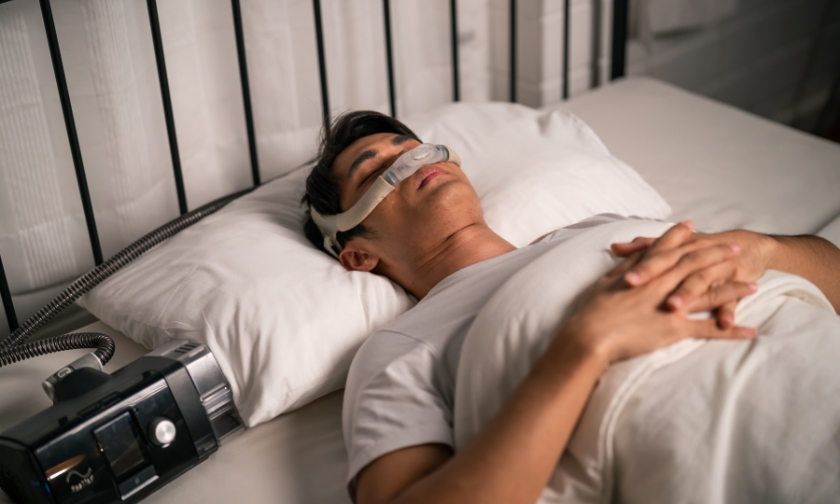
For people with obstructive sleep apnea, this process is interrupted dozens or hundreds of times per night. Each breathing pause triggers a partial arousal that pulls the brain out of restorative sleep stages. The cumulative effect on mental health is severe, and it compounds quietly over months and years before most people connect it to their sleep.
Home sleep testing has made identifying this kind of sleep disruption far more accessible than it once was, which means fewer people have to spend years wondering why they feel the way they feel.
Sleep Apnea and Mood: What the Research Shows
The Depression Connection
The relationship between sleep apnea and depression is well-established in clinical literature and consistently underappreciated in practice. A recent study found that people with obstructive sleep apnea were significantly more likely to report symptoms of depression than those without the condition and that treating the apnea led to measurable mood improvements independent of any antidepressant therapy.
Anxiety That Won’t Respond to the Usual Approaches
Anxiety driven by sleep apnea tends to feel physiological rather than purely psychological – a baseline tension that doesn’t respond well to therapy or stress-management techniques because the nervous system is kept in a state of low-grade arousal by repeated nighttime oxygen drops.
Each apnea event triggers a cortisol spike. Over time, chronically elevated cortisol keeps the sympathetic nervous system (your fight-or-flight response) partially activated even when you’re awake. People describe it as never quite being able to relax, feeling wired yet exhausted, or experiencing a persistent sense of dread without a clear source.
The Signs That Point Toward Sleep as the Problem
Mental health symptoms alone rarely lead people toward a sleep evaluation. That’s part of why sleep apnea goes undiagnosed for so long in people whose primary complaints are psychological rather than physical. The following pattern is worth paying attention to:
- Worsening mood in the morning and gradually improves through the day
- Emotional reactions that feel out of proportion to the situation
- Difficulty sustaining attention on tasks that previously felt manageable
- Irritability that others notice before you do
- Fatigue that sleep doesn’t seem to fix
- Waking with headaches that clear within an hour or two
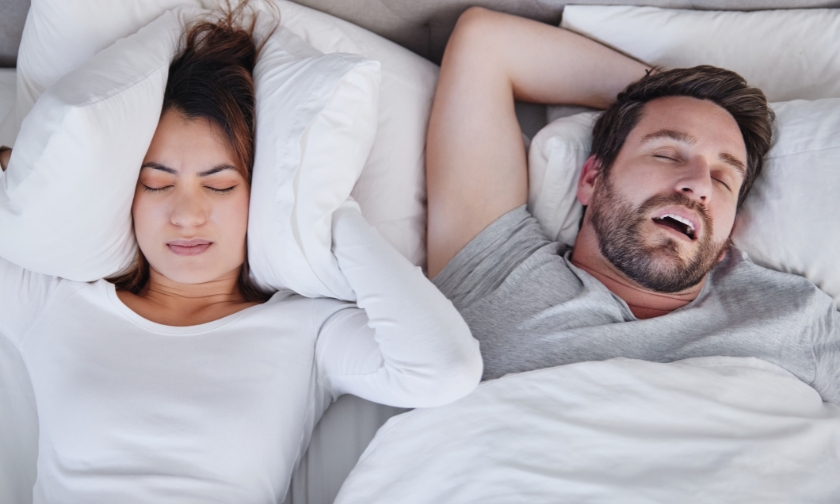
- A partner reports snoring, gasping, or breathing pauses during sleep
Why Getting Evaluated Changes the Conversation
Testing Before Assuming
Too many people spend years in therapy, cycling through medications, or simply white-knuckling through anxiety and depression without ever investigating whether their sleep schedule is intact. Untreated sleep apnea creates a physiological headwind that makes every other intervention harder to sustain.
Treating the sleep disorder doesn’t replace mental health care. It removes a significant obstacle to it working properly.
Home sleep testing has significantly lowered the barrier to entry. Rather than spending a night in an unfamiliar clinical setting with sensors attached and cameras overhead, many patients can now complete an initial sleep study from their own bedroom. The data collected – oxygen saturation levels, breathing patterns, and heart rate variability provide clinicians with enough information to identify obstructive sleep apnea and determine the right next steps.
At Luxe Dental Arts Sugar Land, the evaluation process includes an airway and oral assessment, as well as interpretation of the sleep study. For patients with mild to moderate obstructive sleep apnea, oral appliance therapy offers an effective, non-invasive treatment that many find easier to tolerate than CPAP and that is supported by strong evidence for improving both sleep quality and mood.
What Improvement Looks Like
Patients who successfully treat sleep apnea describe the mental health changes as the most significant part of recovery — more than the reduction in snoring or daytime fatigue. Emotional steadiness returns. Anxiety becomes more manageable as your nervous system is no longer running on fumes. Concentration improves. Relationships improve. The world feels less overwhelming.
Mental health is complex, and there’s rarely a single explanation for why someone feels the way they feel. But when anxiety is persistent, depression is resistant, and nothing seems to shift the baseline, sleep deserves a serious look. Not as a last resort, but as an early, logical step.
Reach out to Luxe Dental Arts to learn more about home sleep testing and find out whether your sleep is playing a bigger role in your mental health than you’ve been told.
People Also Ask
Can treating sleep apnea reduce the need for antidepressants or anti-anxiety medication?
Yes, treating sleep apnea can reduce depression and anxiety for some patients, but any medication changes should only be made with a doctor’s guidance.
How quickly do mood improvements appear after starting sleep apnea treatment?
Many notice mood improvements within a few weeks, with clearer thinking and less irritability. Deeper mood changes may take longer, especially if sleep deprivation has been prolonged.
Is sleep apnea more common in people who already have anxiety or depression?
Yes, both conditions are linked. Anxiety and depression can disrupt sleep, and untreated sleep apnea can worsen them. It’s important to treat both at the same time.
Can children with sleep apnea show signs of anxiety or behavioral problems?
Yes, children with sleep apnea often show hyperactivity and difficulty concentrating, which can be mistaken for ADHD or anxiety. A sleep evaluation is recommended if these signs are present.
Does alcohol worsen the effect of sleep apnea on mood?
Yes, alcohol worsens sleep apnea by relaxing throat muscles, increasing apnea events, and reducing REM sleep, which negatively affects mood and emotional regulation.