18318 University Blvd #500, Sugar Land, TX 77479


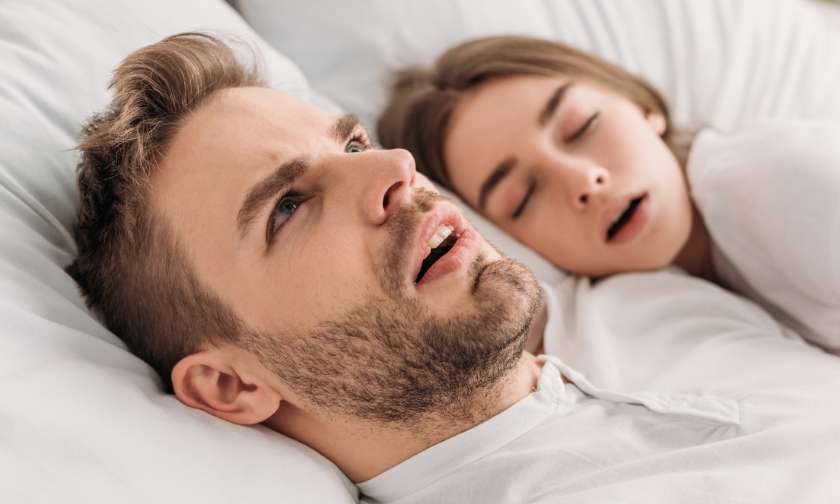
Your sleeping position does more than determine whether you wake up stiff or rested. For people with snoring or obstructive sleep apnea, it can directly influence how many times the airway collapses during the night and how severe those events actually are.
This isn’t a minor detail. Position-dependent sleep apnea is a well-documented clinical phenomenon, and for many patients, recognizing it is the first step toward more effective treatment.
The Airway Physics Behind It
To understand why position matters, you need a quick look at what’s happening in your airway during sleep. When you drift off, the muscles in your throat relax. In people with obstructive sleep apnea, that relaxation allows the soft tissue — the tongue, soft palate, and uvula to partially or fully block the airway.
Gravity plays a direct role in how much that tissue shifts. And that’s exactly where the sleeping position comes into play.
Back Sleeping and Its Airway Impact
Sleeping on your back — the supine position is consistently associated with worse sleep apnea symptoms. When you lie flat, your tongue and soft palate fall directly backward under gravity, significantly narrowing the airway. The result is more frequent apnea events, louder snoring, and lower nighttime oxygen saturation levels.
Research backs this up clearly. Studies published in sleep medicine journals show that positional sleep apnea, in which the apnea-hypopnea index (AHI) is at least twice as high when sleeping on the back as on the side, affects roughly 56% of patients with obstructive sleep apnea. That’s the majority of diagnosed patients.
Side Sleeping and Why It Helps
Lateral sleeping on either your left or right side reduces the gravitational pull on throat tissue, keeping the airway more open. For patients with mild to moderate positional sleep apnea, adopting a consistent side-sleeping position can lead to a meaningful reduction in apnea events.
Some research suggests that left-sided sleeping may offer slight additional benefits for acid reflux, which commonly co-occurs with sleep apnea. But the primary benefit of any lateral position is the same: less airway obstruction, less snoring, and better overnight oxygenation.
What Position Alone Can’t Fix
Here’s where the honest part of this conversation matters. For many patients, positional adjustments offer real improvement, but they don’t resolve the underlying condition. Obstructive sleep apnea is a structural issue, and body position is just one variable among several.
Patients in Sugar Land and across Fort Bend County who come to Luxe Dental Arts often arrive having already tried positional changes, side-sleeping pillows, or wedge cushions. Some find partial relief. Others don’t sustain the position change through the night at all, which is a well-known limitation — you can fall asleep on your side and wake up on your back.
That’s why positional awareness, while useful, typically works best as part of an extensive treatment plan — not as a standalone fix.
Where Sleep Dentistry Fits In
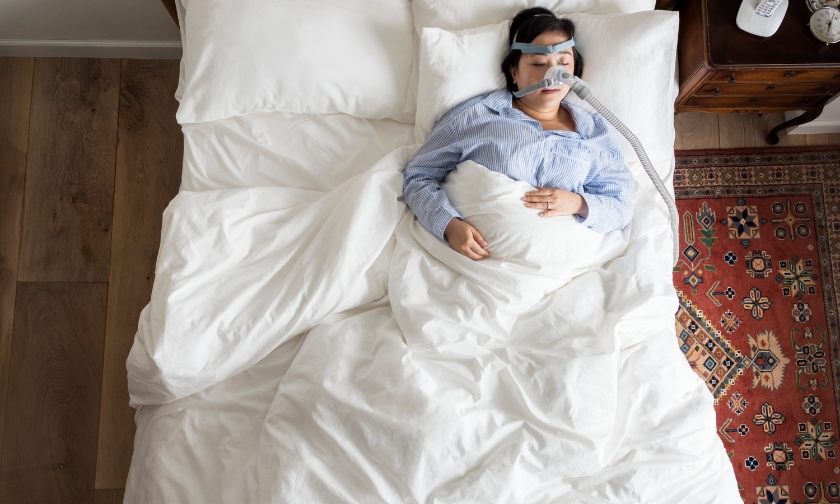
Sleep dentistry in Sugar Land addresses the structural factors that positional changes can’t fully correct. Oral appliance therapy — a custom-fitted mandibular advancement device — repositions the jaw to physically hold the airway open regardless of sleep position. It works whether you’re on your back, your side, or shifting between both through the night.
That consistency matters. A treatment that only works when you maintain a specific position isn’t one most people can rely on long-term.
At Luxe Dental Arts, Dr. Sheth evaluates each patient’s full clinical picture — including positional patterns, symptom severity, and any prior sleep study data — before recommending a treatment path. For some patients, positional therapy combined with an oral appliance produces the best outcomes. For others, the appliance alone is sufficient.
Signs Your Position May Be Making Things Worse
Pay attention to these patterns:
- Your snoring is significantly louder when you sleep on your back
- Your partner notices more pauses in breathing when you’re in the supine position
- You feel more rested on mornings after spending more time on your side
- Your symptoms seem inconsistent night to night, depending on how you slept
These are clinically meaningful observations worth sharing with your provider.
Knowing that sleep position affects your symptoms is useful. Acting on it is what changes things. Sleep dentistry in Sugar Land at Luxe Dental Arts offers treatment options built around your actual anatomy and sleep patterns — not just general recommendations.
Book your consultation with Dr. Sheth at Luxe Dental Arts today. Better sleep doesn’t start with a perfect sleeping position. It starts with the right clinical support.